
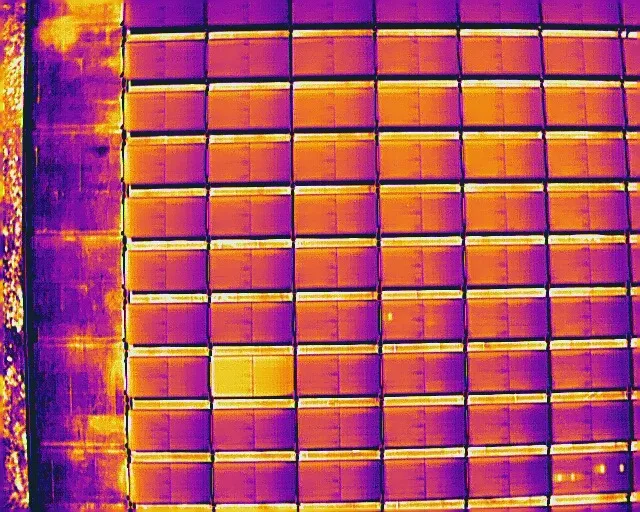
Thermal solar inspections for utility-scale PV
Georeferenced, module-level drone thermography that turns thousands of modules into a short, prioritized list. Capacity of up to 100 MW per day, depending on site layout and conditions.
- FAA Part 107Certified remote pilot
- Level I ThermographyCertified thermographer
- ISNetworldContractor member
- $2M InsuredLiability coverage, COI on request
Findings that map to your maintenance plan.
- Cell and module hot spots
- Bypass diode failures and sub-string outages
- Full string and combiner-level outages
- Cracked glass, delamination and soiling patterns
- Tracker and racking anomalies visible from the air
- Inverter and pad-mount thermal checks (on request)
What you receive.
Executive summary
Scope, asset counts and findings by severity at a glance.
Annotated imagery
Visual and thermal images with every defect marked.
GPS & KMZ
Asset-level coordinates and field-ready map files.
Recommended actions
Observation, potential impact and next step per finding.
Solar Panel Thermal Inspections: common questions
What irradiance is needed for a solar thermal inspection?
Thermal PV inspections are flown under stable, clear-sky conditions with adequate irradiance so faults show reliable temperature contrast. We schedule flights around site conditions and the applicable inspection standard.
How are findings located in the field?
Each anomaly is georeferenced and tied to the module or string, and delivered with GPS coordinates and KMZ / KML files so technicians can walk straight to it.
How fast can you cover a large array?
Up to roughly 100 MW per day depending on layout, terrain, weather and the resolution required.
Planning an inspection campaign?
Tell us the asset type, count and location. We will come back with a scope, schedule and deliverable package.